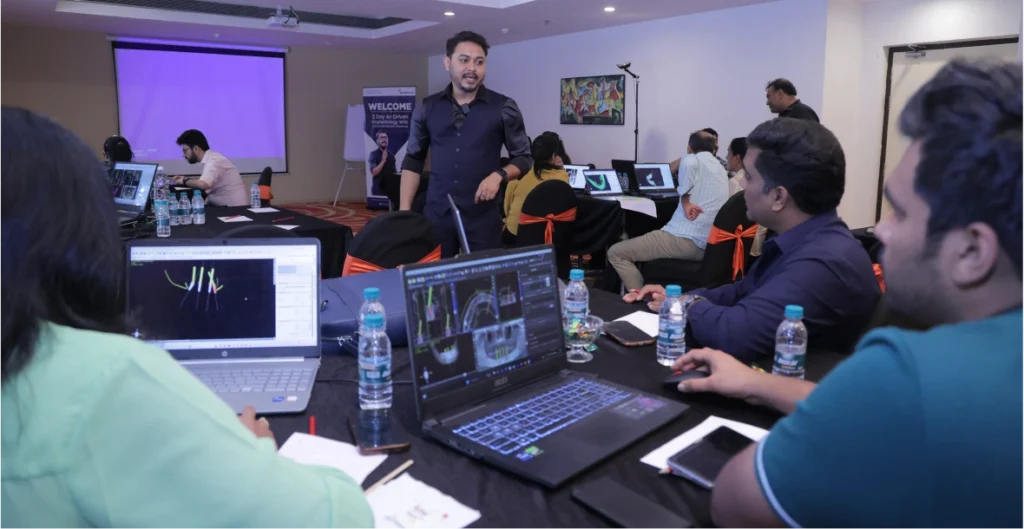

A guide does not create clinical intelligence. It faithfully follows the plan you give it — including its mistakes. The real questions begin much earlier: where should the implant truly sit? What does the final prosthesis demand? When should you trust the guide, and when should you slow down and recheck? How do bone, prosthetics, occlusion, emergence profile and surgery actually speak to each other? That is where guided implantology becomes powerful — and that is what these three days are built to teach.
This isn't guide design, planning screenshots, or theory that fades by Monday morning. You learn how to think through a case, challenge a plan before surgery, connect prosthetic vision with surgical execution, and make digital tools serve your clinical judgment — not the other way around. You won't memorise twenty menus or a hundred shortcuts; you'll learn the logic behind the workflow.
Learn the logic, and the software stops feeling like a complicated machine — and starts to feel like tea and biscuit: familiar, useful, and easy to handle.
Sudeep Paul has spent more than 18 years in digital implantology, guided workflows, surgical planning, immediate-loading systems and complex full-arch rehabilitation — working with guided surgery when many practices were still discovering what it could do. Across a wide range of cases and multiple planning systems, one lesson held: technology is useful only when the clinician knows what to ask of it. For over a decade he has mentored clinicians on BlueSkyPlan workflows — helping dentists see software not as something to fear or blindly trust, but as a tool in the hands of someone who understands the clinical story behind the screen.
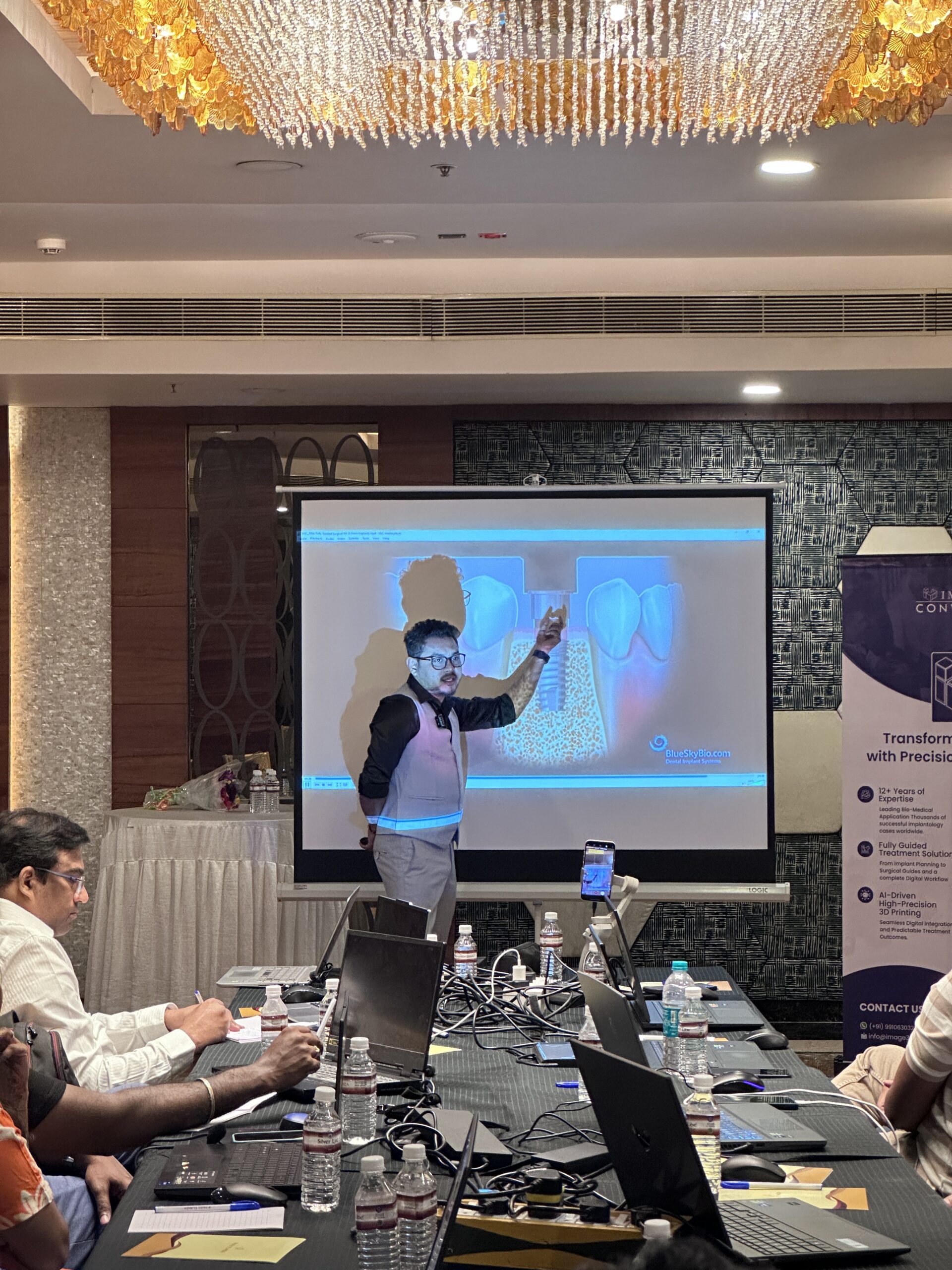
Guided implantology gets technical fast — which is exactly why the experience matters. Expect direct conversations, practical explanations, cases that make you pause, and moments where a difficult concept suddenly becomes simple. The goal isn't to impress you with complexity; it's to make the workflow understandable, usable and genuinely interesting.
What makes the room different: a workflow-first approach over a software-first one, a mentor-led setting where questions are welcomed rather than rushed, and learning that connects directly to clinical decision-making.
A digital-workflow investment isn't judged by the fee alone — judge it by the clarity it builds: better case selection, sharper planning, fewer avoidable surprises, and more confidence before surgery. One well-understood workflow can spare you repeated spending on software, printing and guides you may not truly need.
Get Chandigarh Program Details

Venue details will be shared with confirmed participants.
Share your details to receive the complete Chandigarh program structure, availability and next steps from our team.”