Ten years ago, guided implant surgery was considered an advanced workflow used by only a limited number of clinicians.

Ten years ago, guided implant surgery was considered an advanced workflow used by only a limited number of clinicians. Most implant procedures were still performed freehand, relying heavily on surgical experience and basic radiographic interpretation. While successful outcomes were possible, the workflow often lacked the precision and predictability that modern dentistry now demands.
Over the last decade, guided surgery has completely transformed implant dentistry.
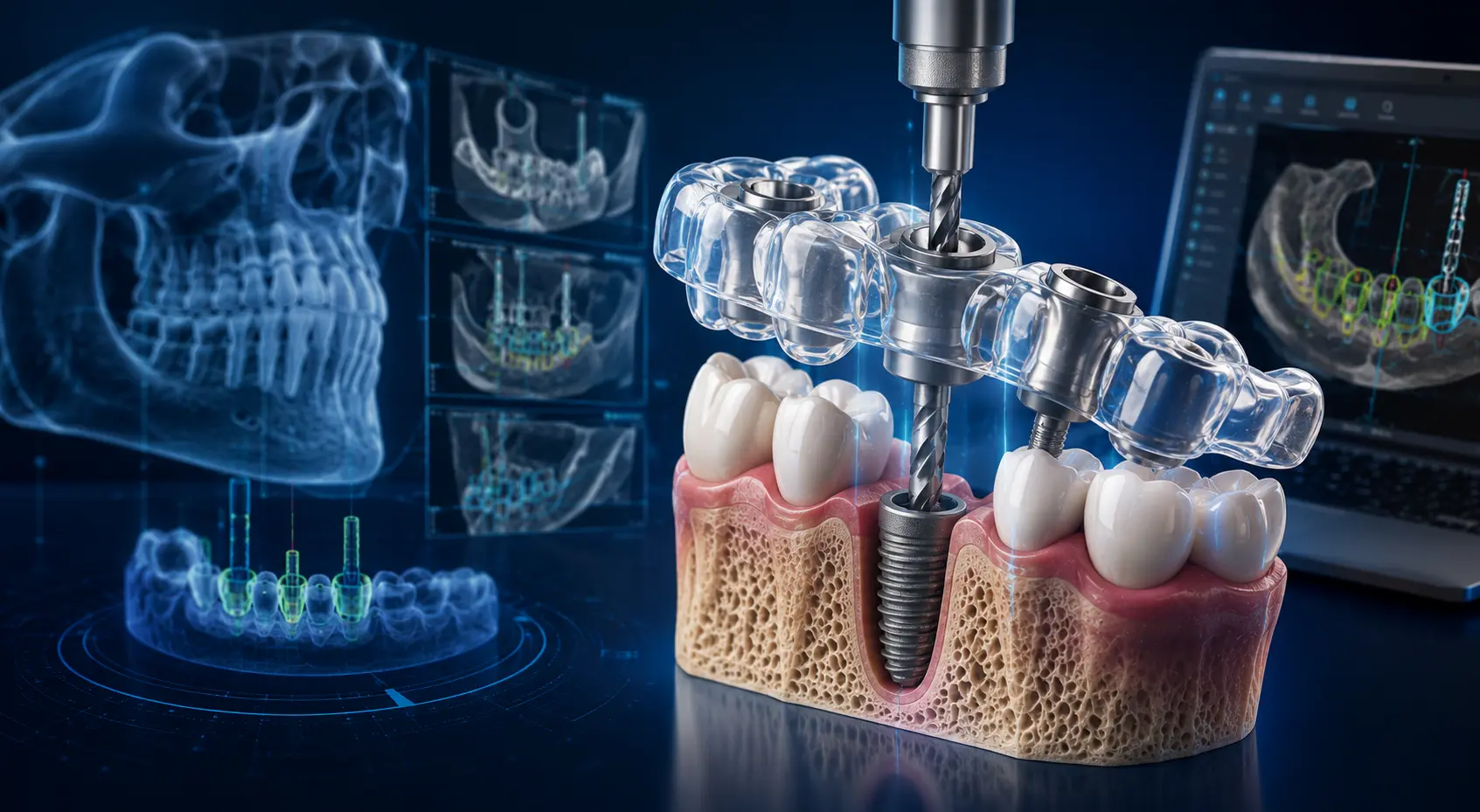
One of the biggest turning points came with the widespread adoption of CBCT imaging. Clinicians could finally visualize bone anatomy, nerve positioning, sinus location, and restorative space in three dimensions before surgery even began. Implant planning slowly shifted from simply placing implants where bone was available to positioning implants according to the final prosthetic outcome.
The growth of intraoral scanning and digital impressions further accelerated this transformation. Dentists and laboratories could merge CBCT data with digital surface scans to create highly accurate virtual treatment plans. Communication between surgical, restorative, and laboratory teams became faster and more predictable.
At the same time, 3D printing made guided surgery more accessible than ever before. Surgical guides that once required complex manufacturing could now be designed and produced with greater speed, accuracy, and affordability. As a result, guided workflows started becoming part of everyday implant practice rather than a specialized luxury.
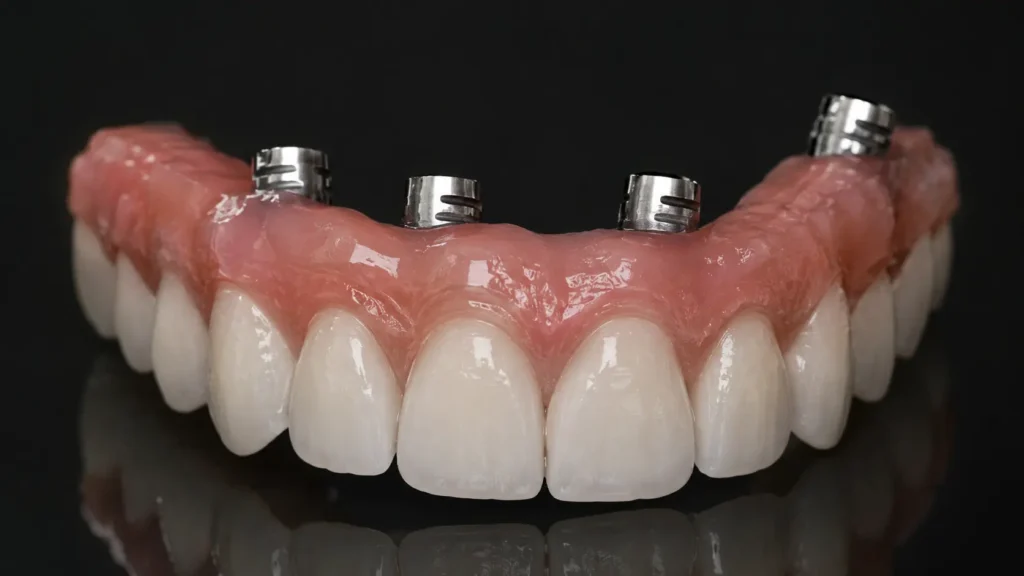
The evolution did not stop with implant positioning alone. Guided surgery gradually expanded into full arch rehabilitation, immediate loading, stackable guides, smile design, and prosthetic-driven workflows. Clinicians could now visualize the final teeth before surgery and execute treatment with far greater confidence.
Artificial intelligence is now shaping the next phase of guided implantology. AI-assisted planning, automated segmentation, and digital workflow automation are helping clinicians reduce complexity while improving efficiency and accuracy.
What makes this evolution truly important is the impact on patient care. Guided surgery has helped improve surgical precision, reduce chairside stress, minimize complications, and enhance prosthetic outcomes. For many dentists, it has also created the confidence to handle complex full arch cases more predictably.
Today, guided surgery is no longer viewed as the future of implant dentistry.
It has become an essential part of modern digital implantology — and the evolution is still continuing.
Today, guided surgery is no longer viewed as the future of implant dentistry.